The challenge we work on
A new executive committee, a reorganisation or a growing team may need to revisit how it decides and provides support. The programme fits when there is a work situation the group can act on and a willingness to review its agreements afterwards.
What you take back
A shared load map: who provides support, who carries out the work and what needs follow-up. The discussion leads to changes with owners and review dates. We do not promise to transform a culture in one day; we offer a starting point the team can test in its work.
Designing your session
Format, duration, group size, venue and participation requirements are agreed before confirmation. The quote depends on that scope. A physical session requires checks on facilitators, venue, safety and applicable coverage; an online enquiry is not a confirmed booking.
Before we meet: one concrete situation
To prepare El Primer Castell, we suggest starting with a conversation with the person organising the session. We look for a situation the team will recognise: a decision that repeatedly returns to the same desk, a handover between functions that keeps breaking down, or a priority competing with everyday work. You do not need a polished presentation. It is more useful to describe what happened, who needed support and what remained unresolved. That question guides the experience and the closing discussion. We also agree what information can be shared with the group and which issues need a different setting.
A sequence with room to notice
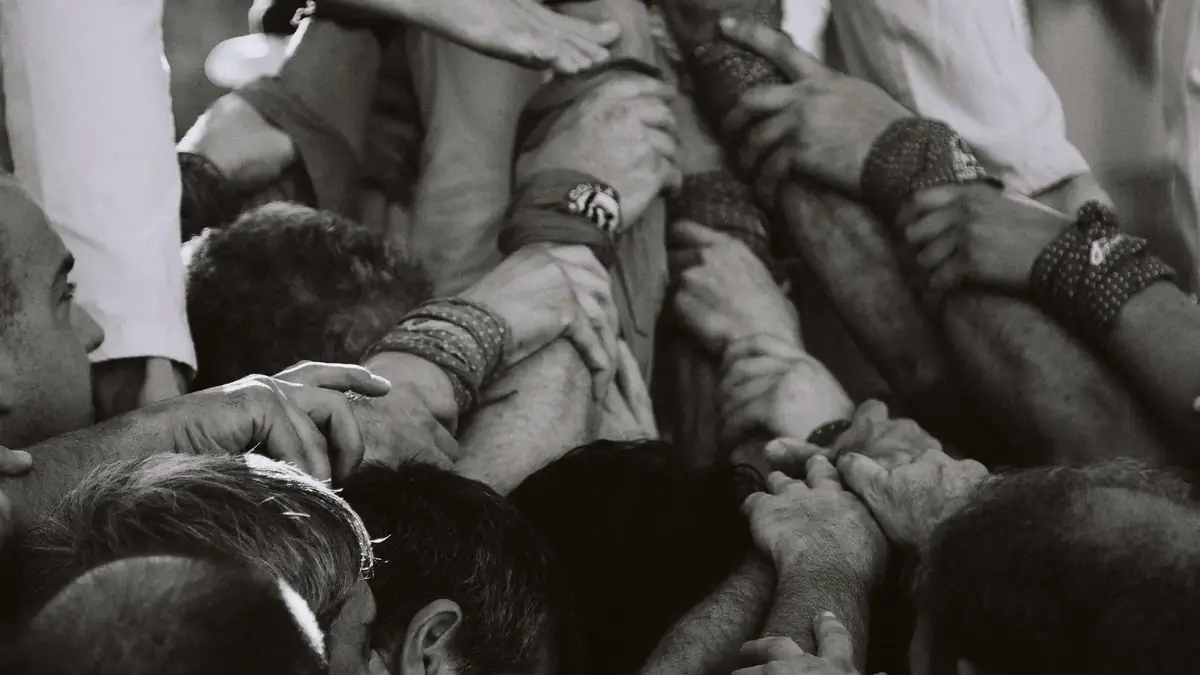
Our proposed sequence has four stages: frame the question, share an experience, examine what happened and decide what to change. Timings depend on the group and venue; before confirmation, you receive an agenda covering each stage, breaks and participation requirements. During the castells experience, we pay attention to how people ask for help, how information travels and how each person finds a role. The debrief returns to observable events without turning a single action into a label for someone. People who experienced the same situation differently need room to explain what they noticed and what support they needed.
What an agreement could look like: an illustration
Imagine a team where every exception ends up with the chief executive. Its load map might reveal that people lack a shared rule for when to escalate. A closing agreement could specify which decisions each function can make, what information it needs from others and when it should ask for help. The owner would bring examples to the review to check whether the rule works or needs changing. This is an illustration, not a client case or a promised outcome. The map is useful when it helps your team define a change it can test in its own context, rather than simply producing an attractive diagram.
Questions to check the fit
Do we need castells experience? Participation is designed around the group’s needs. Does everyone have to take the same role? We agree suitable alternatives without putting pressure on anyone. Can we book part of the programme? We consider this in relation to your question and the time needed to explore it.
Reviewing the experience afterwards
At the review, we examine what the team has tried: did people ask for help earlier, was it clear who could decide, and did the missing information arrive? We record what worked and what did not change. If an agreement could not be applied, we examine what prevented it. The load map can be adjusted using those examples. Additional support, its duration and participants are defined in the proposal.