Choose one question
“Improve collaboration” is too broad to design around. “Which decisions get stuck between functions?” gives the team examples to prepare, perspectives to hear and changes to check. Ask each function for a concrete situation and separate what is known from what is being inferred.
Design the discussion
Make time for people who usually support the work without being in the foreground. A shared experience can provide a starting point if the debrief returns to the original question. Agree how people can participate without turning the session into an individual assessment.
Give the work a next step
Each agreement needs an owner, an observable signal and a review date. At that review, examine what changed and what stayed the same, then decide what to keep or adjust.
The committee’s preparation
Before choosing a venue, we suggest that the organiser write down what needs to be different when the team returns. Choose a question the committee can address with its authority and resources. If it depends on people who will not attend, decide how to include their perspective. Prepare examples of recent work rather than general judgements about other people’s personalities. A useful starting point distinguishes a pending decision, an unresolved dependency and a legitimate difference of opinion. Sharing this question before the offsite helps people arrive with material and avoids spending the entire opening session negotiating why everyone is there.
An agenda built around the decision
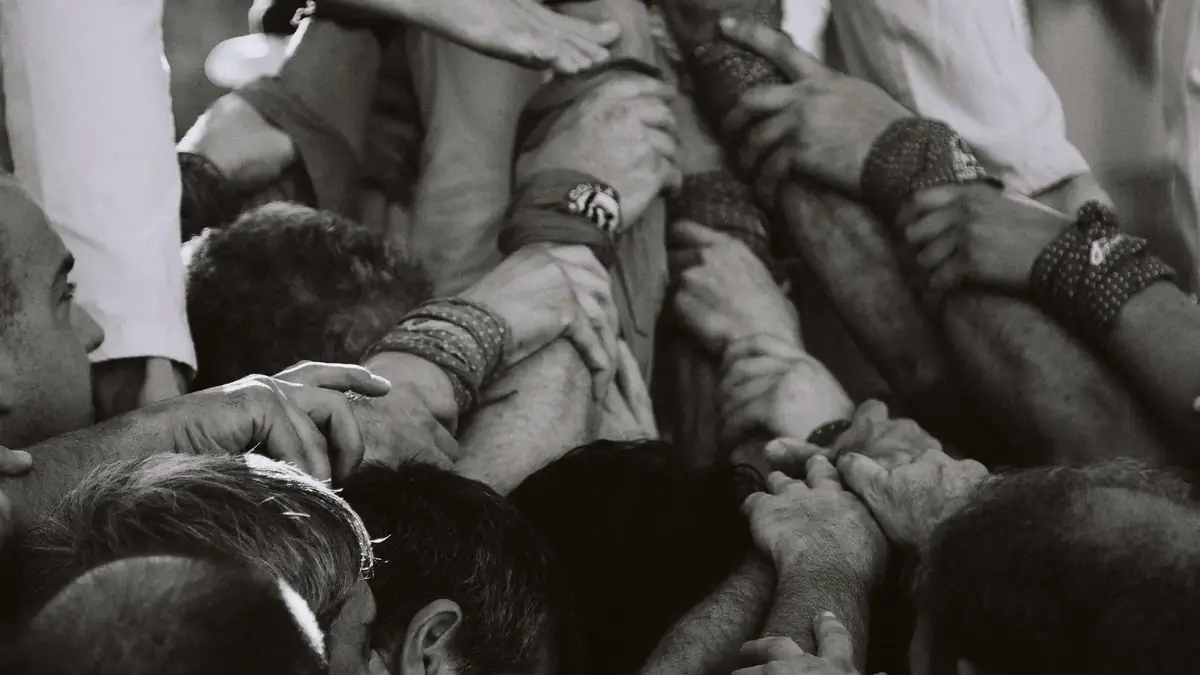
We suggest organising the day around opening, exploration, decision and closure. The opening establishes the question and how the group will work together. Exploration compares perspectives and may include a castells experience where it fits. The debrief connects observations to real work. The decision stage asks the team to choose what it will test and what it will leave aside. Closure reserves time for owners, support and review. Exact timings are agreed with you: an agenda packed with activities can leave too little room for the essential discussion. We also define what will be recorded and who will have access to it afterwards.
Working example: a handover between functions
As an illustration, imagine that sales and operations interpret differently when a promise to a customer becomes a firm commitment. Part of the offsite could reconstruct a request’s journey: what each function knows, what is missing and who can decide. An agreement might define the minimum information required to accept a commitment and what to do when that information is unavailable. Back at work, the committee would review specific situations to see whether the handover is clearer. This is neither a published client case nor a guaranteed improvement. It shows the level of detail we aim for: a recognisable situation and a practice that can be reviewed.
Format, budget and follow-through
Does it have to be away from the office? The venue needs to support concentration and participation; location follows the objective. Must it include castells? The experience makes sense when it helps address the question, and the scope is defined in the proposal. What will we receive? We agree a summary of the work and the commitments the team wants to test. How is it priced? According to preparation, duration, participants, facilitation, venue and requested follow-up. Before fixing a date, we need to know who is organising, who will attend, what decisions are at stake and what constraints apply. The next step is a scoping conversation, not an automatic booking.
What to bring back to the organisation
The committee’s decisions also affect people who did not attend. Prepare a summary explaining what changes, what stays the same and where to raise questions. Include agreements, owners and the conditions needed to test them. Name any unresolved disagreement. Clarify what support Pinyacle will provide and what work will continue within the organisation.